
Look at the image.
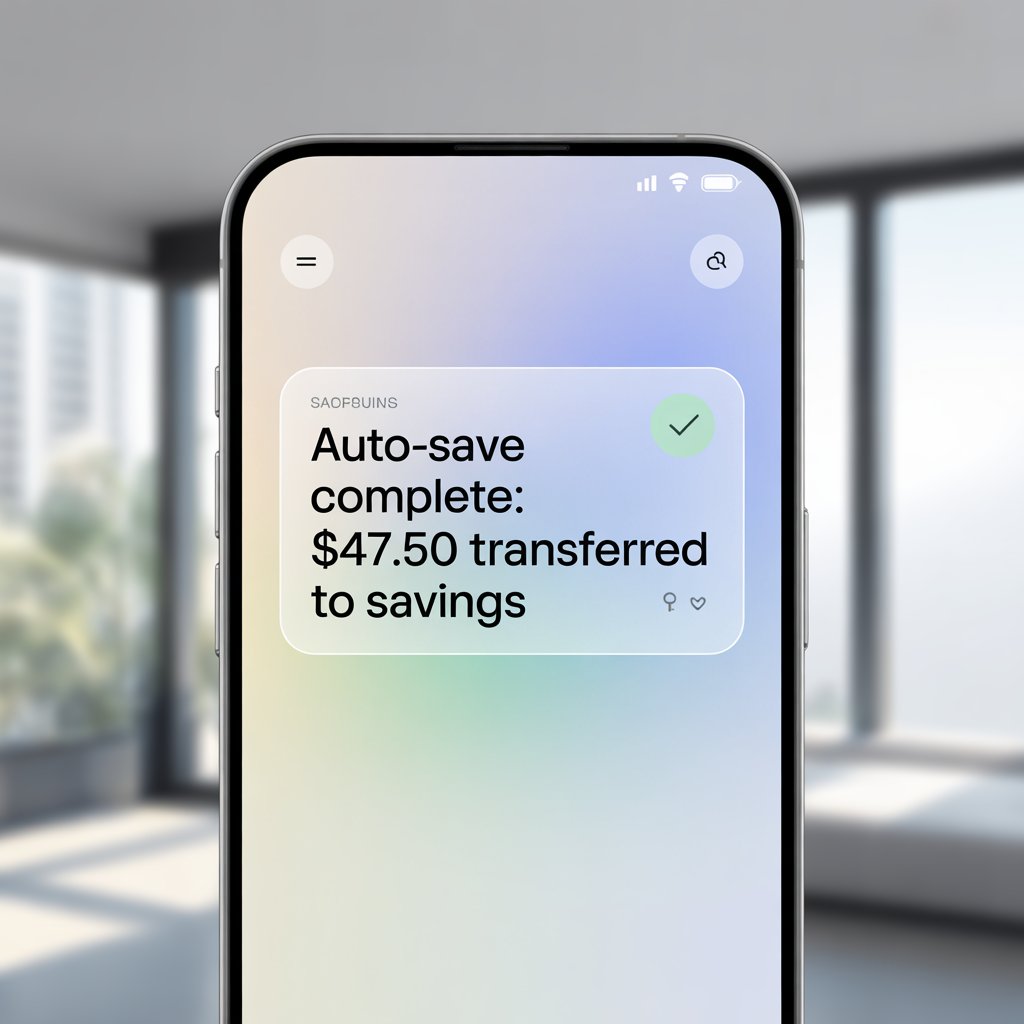
“Auto-save complete: $47.50 transferred to savings.”
No decision.
No debate.
No emotional struggle.
Just done.
That small notification represents one of the most powerful financial habits anyone can build:
Pay yourself automatically.
Not when you “have extra.”
Not when you feel disciplined.
Not when the month goes well.
Automatically.
Let’s break down why this works — and how you can use it immediately.
Why Most People Struggle to Save
Saving manually depends on:
- Motivation
- Memory
- Leftover money
- Willpower
But willpower is unreliable.
By the end of the month, money feels tighter.
Unexpected expenses appear.
Something “important” comes up.
So saving gets postponed.
Again.
The solution isn’t more discipline.
It’s fewer decisions.
The Power of an Automatic Savings Strategy
When you automate savings:
- The money moves before you spend it.
- You adapt your lifestyle around what remains.
- You remove emotional friction.
It becomes invisible progress.
$47.50 may not seem life-changing.
But twice a month?
That’s $95.
Over a year?
$1,140.
Over 5 years?
$5,700 — not including interest.
Small transfers compound into big security.
How to Set It Up (Step-by-Step)
Anyone can implement this today.
1. Open a Separate Savings Account
Preferably:
- High-yield
- Not linked to your debit card
- Slightly inconvenient to access
This creates a psychological barrier.
2. Automate the Transfer the Day After Payday
Timing matters.
Schedule your transfer:
- 24 hours after paycheck hits
- Before discretionary spending begins
Start small if needed:
- $25
- $50
- $100
Consistency beats size.
3. Use Percentage, Not Leftovers
Instead of saying:
“I’ll save what’s left.”
Say:
“I save 10% automatically.”
It shifts saving from optional to standard.
The Psychological Advantage
Here’s what most people don’t realize:
You don’t miss what you never see.
If $500 hits your account, you mentally spend $500.
If $450 hits because $50 auto-saved?
You adapt to $450.
That adaptation is powerful.
Automatic saving turns financial growth into default behavior.
Upgrade the System: Tiered Auto-Saving
Once comfortable, layer it:
- Auto-save to emergency fund
- Auto-invest into retirement account
- Auto-transfer to travel or sinking fund
Each transfer creates structure.
Each structure reduces chaos.
Common Mistakes to Avoid
- Saving “when convenient.”
- Keeping savings too accessible.
- Increasing lifestyle every time income rises.
- Stopping automation during minor setbacks.
Automation only works when it’s protected.
Who This Works For
- People bad at budgeting
- Busy professionals
- Couples who argue about money
- Anyone who feels behind financially
If you struggle with discipline, automation is your ally.
The Bigger Principle: Systems Beat Motivation
Motivation fades.
Systems endure.
The image isn’t about $47.50.
It’s about identity.
You become someone who saves — automatically.
Over time, that identity changes your net worth.
Start Today
Open a savings account.
Schedule a small automatic transfer.
Let the system do the work.
Wealth rarely comes from one big decision.
It comes from quiet, repeated, automatic ones.
That notification?
That’s not just $47.50.
It’s future security building itself in the background.