
Introduction to Smart Energy Saving at Home
Many households are looking for ways to lower utility bills without sacrificing comfort. Energy prices continue to rise, and monthly expenses for electricity, heating, and water can add up quickly.
However, the good news is that small improvements can make a big difference. Simple habits, smart technology, and energy-efficient upgrades can reduce waste and help families save money.
Many homes lose energy through poor insulation, outdated appliances, or inefficient lighting. As a result, heating and cooling systems must work harder, which increases energy costs.
By understanding where energy is used in a home, people can make smarter choices and reduce unnecessary expenses.
What Is the Easiest Way to Lower Utility Bills?
Understanding Why Utility Costs Keep Rising
Energy prices fluctuate due to supply, demand, and infrastructure costs. At the same time, modern households use more devices than ever before.
For example, homes now rely on:
- computers and tablets
- smart TVs and streaming devices
- kitchen appliances
- charging stations for phones and electronics
Because of this, electricity consumption has steadily increased over time.
Meanwhile, heating and cooling systems remain the largest energy users in most homes.
Simple Daily Habits That Reduce Energy Waste
Not every energy-saving improvement requires a large investment. In fact, daily habits can significantly reduce energy waste.
For instance, people often leave electronics plugged in even when they are not being used. These devices still draw electricity, which is known as phantom energy.
Helpful habits include:
- turning off lights when leaving a room
- unplugging chargers when not in use
- washing clothes with cold water
- running dishwashers only when full
Although these actions seem small, they can reduce electricity use over time.
Stop Phantom Energy with Smart Power Strips
Many devices continue to use electricity even when turned off. For example, televisions, game consoles, and streaming devices often draw standby power.
Smart power strips help solve this problem. They automatically shut off electricity to devices that are not being used.
Benefits include:
- reducing phantom energy usage
- protecting electronics from power surges
- controlling devices with one switch
Recommended product:
Kasa Smart Power Strip by TP-Link
Smart Technology That Helps Lower Utility Bills
Smart home technology makes energy efficiency easier to manage. In many homes, heating and cooling account for 40–50% of total energy use.
Because of this, improving temperature control can significantly reduce monthly expenses.
Smart Thermostats
Smart thermostats automatically adjust temperatures based on daily schedules. As a result, heating and cooling systems only run when necessary.
For example, temperatures can automatically lower at night or while people are away from home.
Advantages include:
- automatic temperature scheduling
- smartphone control
- energy usage reports
- lower heating and cooling costs
Many households save 10–15% on heating and cooling bills after installing a smart thermostat.
Recommended product:
Google Nest Learning Thermostat
Lighting Improvements That Save Money
Lighting is one of the easiest places to improve energy efficiency. Traditional incandescent bulbs waste a large amount of electricity by producing heat.
Fortunately, LED lighting offers a much better alternative.
LED Lighting Benefits
LED bulbs use up to 80% less electricity than traditional bulbs. In addition, they last much longer.
This means fewer replacements and lower electricity costs.
Benefits of LED lighting include:
- lower energy consumption
- longer lifespan
- reduced heat production
- lower maintenance costs
Recommended product:
Philips LED Soft White A19 Bulbs (8 Pack)
Reduce Water Heating Costs
Water heating is usually the second-largest energy expense in most homes.
Therefore, reducing hot water use can help lower both water and energy bills.
Low-Flow Showerheads
Low-flow showerheads reduce the amount of water used while maintaining comfortable water pressure.
As a result, less hot water is required. This reduces energy usage from water heaters.
Advantages include:
- reduced water consumption
- lower water heating costs
- easy installation
- environmentally friendly
Recommended product:
High Sierra 1.5 GPM Low Flow Showerhead
Improve Home Insulation and Sealing
One of the most effective ways to lower utility bills is improving insulation.
Poor insulation allows warm or cool air to escape. Consequently, heating and cooling systems must run longer to maintain indoor temperatures.
Key areas to improve insulation include:
- attic spaces
- exterior walls
- floors above garages
- windows and doors
Weatherstripping and caulking around windows can also stop air leaks.
Track Energy Usage with a Home Energy Monitor
Understanding electricity usage makes it easier to reduce waste.
Home energy monitors show how much electricity a home uses in real time. They also identify which appliances consume the most power.
This information helps people make smarter energy decisions.
Recommended product:
Sense Energy Monitor
Small Habits That Instantly Reduce Energy Costs
In addition to technology upgrades, simple habits can reduce energy use immediately.
Examples include:
- lowering the thermostat by a few degrees in winter
- using ceiling fans in summer
- closing blinds during hot afternoons
- washing laundry with cold water
These habits require little effort but provide noticeable savings.
Long-Term Financial and Environmental Benefits
Reducing energy consumption benefits both households and the environment.
Over time, energy-efficient homes experience:
- lower monthly expenses
- increased property value
- reduced environmental impact
- improved home comfort
As a result, investing in efficiency improvements can provide long-term financial benefits.
Frequently Asked Questions
What appliances use the most electricity in a home?
Heating and cooling systems, water heaters, refrigerators, and clothes dryers typically consume the most electricity.
Do smart thermostats really save money?
Yes. Many households save 10–15% on heating and cooling costs by using programmable or smart thermostats.
Are LED bulbs worth the cost?
Absolutely. LED bulbs use much less electricity and last significantly longer than traditional bulbs.
How can people quickly lower electricity bills?
Switching to LED lighting, unplugging unused electronics, and adjusting thermostat settings can immediately reduce electricity costs.
Are low-flow showerheads effective?
Yes. They reduce water usage while maintaining strong water pressure.
How much can insulation reduce energy bills?
Proper insulation can reduce heating and cooling costs by 10–20% depending on the home.
Conclusion
Finding ways to lower utility bills does not require major sacrifices. Instead, combining simple habits with smart technology can dramatically reduce energy waste.
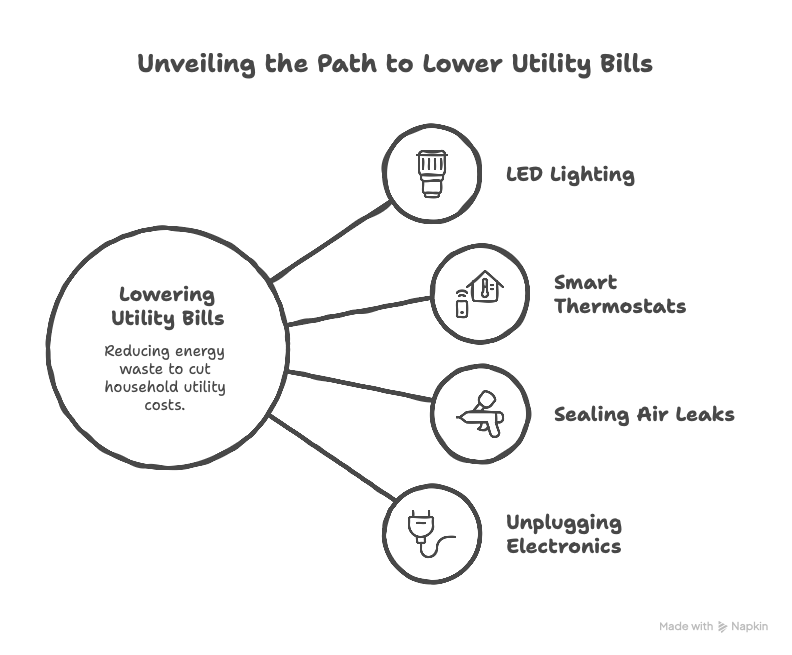
For example, switching to LED lighting, installing a smart thermostat, and sealing air leaks can significantly improve home efficiency.
Over time, these changes help households save money while creating a more comfortable and sustainable living environment.