I Started With the Truth: Know Your Real Cost
Before I searched for money, I had to understand my numbers.
Not just tuition — the full cost:
- Tuition
- Fees
- Books
- Housing
- Transportation
- Food
Most colleges publish a full “Cost of Attendance” breakdown. You can also compare schools using tools from the College Board:
👉 https://bigfuture.collegeboard.org/pay-for-college
This clarity changed everything.
Some schools that looked “expensive” actually gave more grants. Some cheaper schools offered almost no aid.
Lesson learned:
Don’t assume. Compare real numbers.
I Filled Out the FAFSA Immediately (Not Eventually)
If you do one thing — do this early.
The FAFSA (Free Application for Federal Student Aid) opens the door to:
- Federal grants
- Work-study programs
- State aid
- Some scholarships
It’s handled through Federal Student Aid under the U.S. Department of Education.
Apply here:
👉 https://studentaid.gov
Even if you think you won’t qualify — apply.
I almost didn’t. That would’ve been a mistake.
I qualified for grants I didn’t expect.
And grants are money you do not pay back.
That alone reduced thousands from my total cost.
I Focused on Grants First, Scholarships Second
Here’s something I misunderstood at first:
Grants are often easier and more substantial than random scholarships.
Types I pursued:
- Federal Pell Grants
- State need-based grants
- Institutional grants from the school
Then I targeted scholarships strategically.
Instead of applying to 100 random ones, I:
- Applied to local scholarships (less competition)
- Looked through my school’s financial aid office listings
- Asked community organizations directly
Many small $500–$1,000 awards add up quickly.
Action Tip:
Create a simple spreadsheet:
- Name
- Deadline
- Requirements
- Status
Treat it like a part-time job for one season. It pays better than most jobs per hour invested.
I Worked — But Strategically
Working during school is not glamorous. But it works.
There are two smart approaches:
Option A: Work-Study
If you qualify through FAFSA, federal work-study jobs are flexible and campus-based.
Option B: High-Value Part-Time Work
Instead of random low-wage jobs, I looked for:
- Campus tutoring
- Tech help desk
- Administrative roles
- Paid internships
Paid internships were a game changer.
They paid more than typical student jobs and built experience.
Lesson:
Work that builds skills pays twice — now and later.
I Used Employer Tuition Assistance
This one is overlooked.
Many companies offer tuition reimbursement.
Even part-time employers sometimes offer education benefits.
Ask directly.
You’d be surprised.
Also check with the Internal Revenue Service for current education tax credits like the American Opportunity Tax Credit:
👉 https://www.irs.gov/credits-deductions/individuals/education-credits
Tax credits can return thousands of dollars at filing time.
That refund?
I sent it straight back toward tuition.
I Considered Community College First
This was one of the smartest moves I made.
General education credits are often:
- Identical
- Transferable
- A fraction of the price
Two years at community college + two years at university can cut costs dramatically.
It’s not flashy.
But it works.
And no one asks where you took freshman English once you graduate.
I Avoided Lifestyle Debt While in School
Here’s a mistake I almost made:
Using credit cards to “make it easier.”
Books. Food. Gas. Small expenses.
It’s tempting.
But lifestyle debt during school multiplies stress later.
Instead, I:
- Lived with roommates
- Bought used textbooks
- Used campus resources
- Kept fixed expenses low
Financial discipline in school shortens financial struggle after school.
I Opened a 529 Plan for Long-Term Planning
If you’re planning ahead or helping your kids — a 529 plan allows tax-advantaged savings for education.
It’s one of the most effective long-term strategies available.
The earlier you start, the more compound growth helps.
If I could go back, I would’ve started earlier — even small amounts.
I Learned That Pride Is Expensive
This one is personal.
I didn’t want help.
I didn’t want to ask questions.
I didn’t want to look like I needed assistance.
But asking for help saved me thousands.
Talk to:
- Financial aid advisors
- Academic counselors
- Employers
- Community leaders
The worst they can say is no.
The best they can say is yes.
What Actually Worked
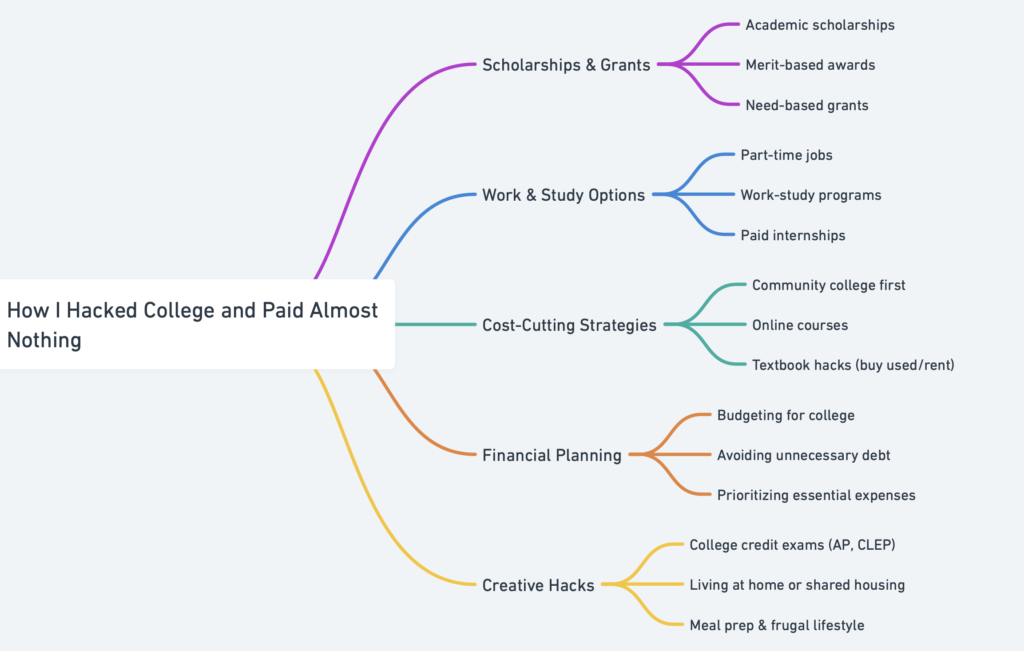
Here’s the simplified roadmap that helped me figure out how to pay for college without loans:
- Know the true cost.
- Apply for FAFSA early.
- Maximize grants.
- Apply for targeted scholarships.
- Work strategically.
- Use tax credits.
- Keep lifestyle costs low.
- Transfer credits wisely.
- Stay organized.
It wasn’t one big breakthrough.
It was small disciplined moves layered together.
What Changed for Me
The biggest shift wasn’t financial.
It was mental.
Instead of feeling trapped, I felt proactive.
Instead of reacting to bills, I had a plan.
Instead of assuming debt was unavoidable, I proved to myself it wasn’t.
And that confidence followed me long after graduation.
Final Thoughts
If you’re overwhelmed right now, take a breath.
You don’t need to solve everything today.
Start with one step:
✔️ Fill out FAFSA.
✔️ Compare school costs.
✔️ Apply to one scholarship.
✔️ Call one employer about tuition help.
One move today changes your direction.
You don’t need loans to build your future.
You need information, structure, and consistency.
Start your plan today.
Your future self will thank you.