
Look at the image.
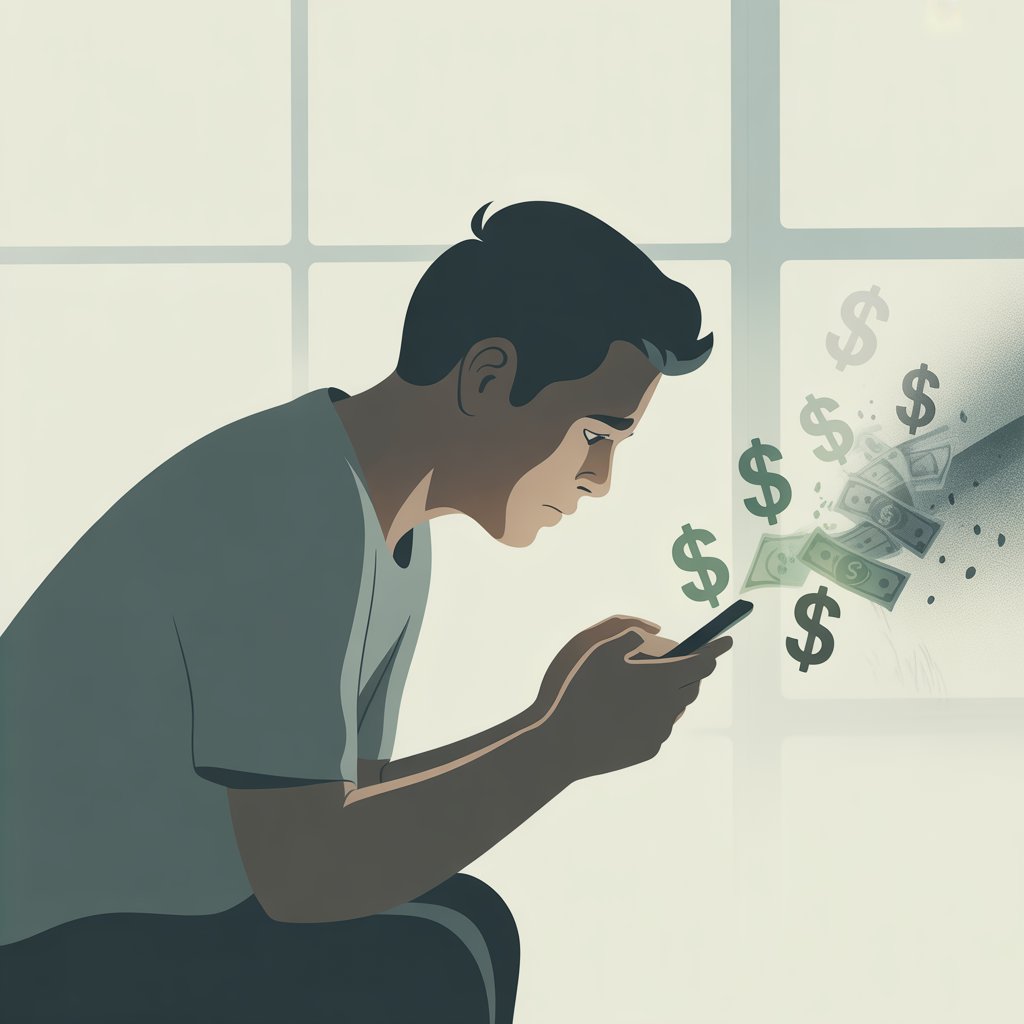
A person sitting alone.
Head down.
Phone glowing.
Dollar signs floating out of the screen.
It’s not just about online shopping.
It’s about escape.
For many people, money doesn’t disappear because they’re careless.
It disappears because they’re coping.
Let’s talk about emotional spending habits — and how to break them without guilt.
The Hidden Cost of Stress Spending
Emotional spending often happens when you feel:
- Stressed after work
- Lonely at night
- Frustrated with life
- Overwhelmed or bored
The phone becomes an easy outlet.
One click.
Instant dopamine.
Temporary relief.
But relief fades.
The charge stays.
Over time, this pattern keeps you stuck — not because you lack discipline, but because you lack a substitute.
Why Willpower Alone Doesn’t Work
Most advice says:
“Just stop buying things.”
But emotional spending isn’t logical.
It’s psychological.
You’re not buying the item.
You’re buying:
- Comfort
- Distraction
- Control
- Validation
To fix the habit, you need a replacement — not restriction.
Step 1: Identify Your Trigger Window
Ask yourself:
When do I usually spend impulsively?
Is it:
- After 9 PM?
- After arguments?
- After a long workday?
- When scrolling social media?
Most people have a predictable “trigger window.”
Awareness weakens impulse.
Step 2: Add a 24-Hour Delay Rule
Before buying anything unplanned:
Wait 24 hours.
If you still want it tomorrow — and it fits your budget — buy it.
But most emotional purchases lose their power overnight.
Impulse thrives on urgency.
Delay kills urgency.
Step 3: Remove Friction-Free Checkout
Make spending slightly harder:
- Delete saved card info.
- Log out of shopping apps.
- Remove one-click checkout.
- Unsubscribe from promotional emails.
Add friction.
Reduce temptation.
Small barriers protect big goals.
Step 4: Create a “Relief Fund”
Instead of banning spending, budget it.
Example:
- $50–$100 monthly guilt-free spending
- No explanation needed
- No shame attached
When relief is planned, it stops being destructive.
Step 5: Replace the Dopamine Loop
If scrolling leads to spending, swap the habit:
Instead of:
Open shopping app.
Try:
- Go for a 10-minute walk.
- Journal your thoughts.
- Text a friend.
- Review your savings goal.
You’re not removing comfort.
You’re upgrading it.
The Bigger Truth
Money leaks through emotion when you feel out of control.
Financial stability begins when you regain control of the process — not just the dollars.
The person in the image isn’t irresponsible.
They’re overwhelmed.
And overwhelm needs structure.
Action Plan
Starting today:
- Identify your emotional trigger.
- Install a 24-hour rule.
- Remove saved payment methods.
- Set a small monthly relief budget.
- Track impulse purchases for 30 days.
No shame.
No extreme budgeting.
Just awareness and structure.
Because emotional spending isn’t about money.
It’s about feelings.
And once you manage the feelings, the money follows.