
I used to think my problem was income.
If I could just make a little more, I told myself, everything would click. I would save more. I would invest more. I would finally feel ahead.
Then I got a raise.
And strangely, nothing changed.
In fact, I still felt tight at the end of every month. Meanwhile, my car sat in the driveway looking impressive. Clean paint. Nice wheels. Comfortable interior. A monthly payment that seemed reasonable when I signed the papers.
That was the moment I began to understand Why Your Car Is Keeping You Broke. It is not dramatic. It is math.
Let me walk you through what I learned, the mistakes I made, and the simple systems that changed everything.
1. I Looked at the Payment Instead of the Total Cost
When I bought my car, I focused on one number. The monthly payment.
The dealership made it easy. Stretch the loan. Lower the payment. Make it feel affordable.
However, I never asked the more important question. What is the total cost over time?
So I finally used the auto loan calculator from NerdWallet
https://www.nerdwallet.com/article/loans/auto-loans/auto-loan-calculator
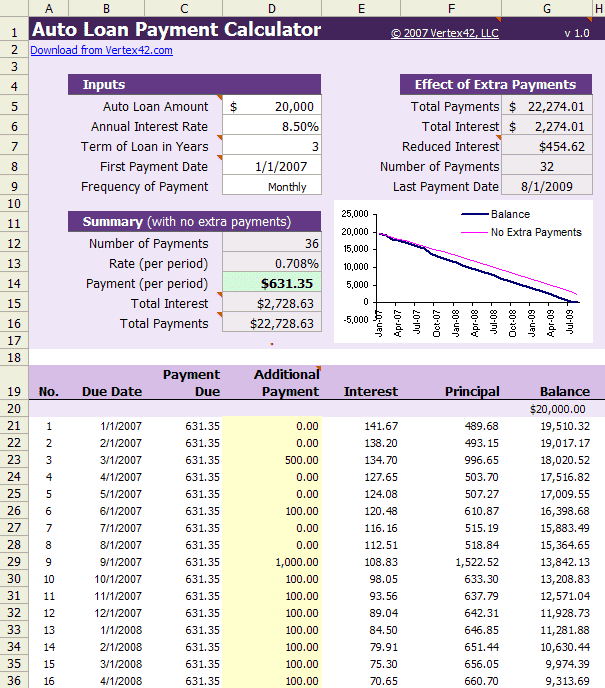
When I entered my numbers, the interest alone was thousands of dollars. Suddenly, that manageable payment looked expensive.
Lesson I learned: A low payment can hide a very high total cost.
Action step you can take today:
Run your own numbers. Do not guess. Calculate the full loan cost including interest. Awareness is the first step toward control.
2. I Ignored the True Cost of Ownership
The payment was only the beginning.
Then came insurance. Because the car was newer, my premium was high. I compared quotes using The Zebra
https://www.thezebra.com/auto-insurance/
Then there was gas. Bigger engine meant more fuel. And when prices climbed, so did my stress.
Then maintenance. Tires. Brakes. Oil changes. Repairs.
To see the real picture, I reviewed annual driving cost estimates from AAA
https://newsroom.aaa.com/auto/your-driving-costs/

When I added everything together, I realized my vehicle was costing far more than I admitted.
Lesson I learned: Your car is not one expense. It is a system of recurring expenses.
Action step:
Write down your total monthly car cost including payment, insurance, gas, maintenance, registration, and repairs. Seeing the real number changes how you think.
3. I Underestimated Depreciation
This was the part that hurt my ego.
Cars lose value. Quickly.
I checked vehicle value trends through Kelley Blue Book
https://www.kbb.com/
At the same time, I used the compound interest calculator from Investor.gov
https://www.investor.gov/financial-tools-calculators/calculators/compound-interest-calculator
When I compared what my car was losing each year to what investments could gain, the opportunity cost became obvious.
Every dollar tied up in my car was a dollar not compounding.
Lesson I learned: Depreciation quietly steals wealth while compounding quietly builds it.
Action step:
Take your monthly car cost and run it through a compound interest calculator for ten years. The future value might shock you.
4. I Let Ego Drive the Decision
This one was uncomfortable.
I did not just want transportation. I wanted the feeling of success. The comfort. The compliments.
However, nobody was paying my car payment except me.
When I became honest, I asked myself three questions before any future upgrade:
Is this a need or a status decision
Will this delay my financial independence
Could a reliable used vehicle accomplish the same purpose
To research reliability instead of brand hype, I looked at ratings from Consumer Reports
https://www.consumerreports.org/cars/
Shifting from image to function changed everything.
Lesson I learned: Ego is expensive. Practicality is powerful.
Action step:
Before upgrading, pause for 30 days. If you still believe it aligns with your financial goals after that waiting period, then reconsider.
5. I Created a Car Rule and Redirected the Difference
Instead of feeling guilty, I created a system.
My rule now is simple. My total vehicle cost must stay within a responsible percentage of my take home income. Additionally, I prioritize reliability and longevity over appearance.
When I eventually downsized, I freed up hundreds per month.
Instead of letting that money disappear, I automated it into:
Emergency savings
Retirement accounts
Brokerage investments
Gradually, my stress decreased. My savings increased. And for the first time, I felt forward momentum.
Interestingly, nobody treated me differently because my car was simpler. The pressure had been internal.
Why Your Car Is Keeping You Broke and How To Fix It
If you feel stuck financially despite earning decent money, your car may be a major factor.
Here is your simple checklist:
Calculate total loan cost
Add all ownership expenses
Measure opportunity cost
Set a strict car spending rule
Redirect savings into assets
You do not need to make a drastic decision overnight. However, you do need clarity.
Because wealth is often built in small consistent margins.
And sometimes that margin is parked in your driveway.
Your First Step Today
Tonight, open your banking app.
Calculate your real monthly car cost. Then visit a compound interest calculator and project that number forward ten years.
See what your money could become if redirected toward assets instead of depreciation.
That awareness might be the turning point.
If this resonated with you, share it with someone who feels financially stuck. And more importantly, take one honest step today.
Because understanding Why Your Car Is Keeping You Broke might be the moment you finally start building wealth instead.