
If you want real financial freedom, you must learn how to save, invest, earn the smart way.
These three actions form the foundation of wealth building. Individually, they help. However, when combined strategically, they transform your financial future.
Many people work hard but never build lasting wealth. Why? Because earning alone is not enough. Without saving, money disappears. Without investing, savings lose value. Meanwhile, without increasing income, long-term growth slows down.
This guide gives you a complete roadmap — simple, practical, and built for long-term results.
What Does Save, Invest, Earn Really Mean?
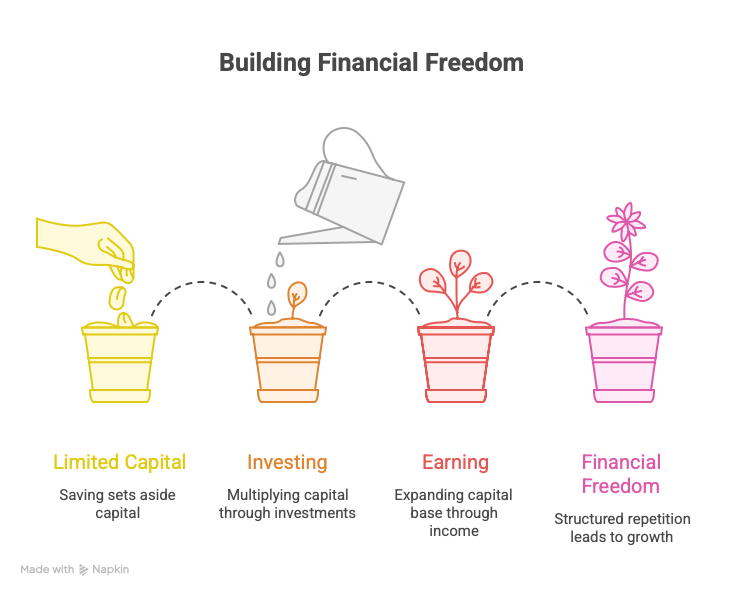
Step 1: How to Save Money Consistently
Before you invest aggressively or chase income growth, stability must exist. Therefore, saving becomes your first priority.
Saving money protects you from:
- Debt spirals
- Emergency stress
- Forced withdrawals from investments
How Much Should You Save?
A strong starting point is 20% of your income. However, if that feels aggressive, begin with 5–10% and increase gradually.
Consistency matters more than perfection.
The 50/30/20 Budget Rule
The 50/30/20 rule divides income into:
- 50% needs
- 30% wants
- 20% savings and investing
Because it balances structure and flexibility, this method works well for beginners.
Build an Emergency Fund First
An emergency fund should cover 3–6 months of expenses.
This prevents:
- High-interest borrowing
- Emotional financial decisions
- Long-term setbacks
Keep it in a high-yield savings account for liquidity.
Step 2: Smart Ways to Invest Your Money
Once you save consistently, the next step is to invest. Saving preserves money. Investing grows it.
Historically, diversified long-term investing has produced consistent growth over decades (source: Investopedia).
Beginner-Friendly Investment Options
If you are new to investing, consider:
- Index funds
- ETFs
- Retirement accounts
- Dividend-paying stocks
Because diversification reduces risk, broad-market funds often outperform emotional stock picking.
The Power of Compound Interest
Compound interest means earning returns on both your initial investment and accumulated gains.
Example:
Invest $200 monthly at 8% annually:
- 10 years: ~ $36,000
- 20 years: ~ $118,000
- 30 years: ~ $300,000+
Time multiplies discipline.
For investing structure:
→ Read Next: The Three Jars That Quietly Build Wealth
Common Investment Mistakes
Avoid:
- Emotional buying and selling
- Market timing attempts
- Ignoring diversification
- Overlooking fees
Long-term strategy beats short-term reactions.
Step 3: Practical Ways to Earn More
Saving protects. Investing compounds. Earning accelerates.
Therefore, increasing income expands everything else.
How to Increase Salary
Boost income by:
- Learning high-demand skills
- Earning certifications
- Negotiating raises
- Switching companies strategically
- Expanding your professional network
Skill growth often produces higher returns than cutting small expenses.
Side Hustles That Support Save, Invest, Earn
Additional income streams may include:
- Freelancing
- Online tutoring
- E-commerce
- Content creation
- Affiliate marketing
Choose something aligned with your strengths and schedule.
Building Passive Income
Passive income reduces reliance on one paycheck.
Examples:
- Dividend stocks
- Rental properties
- Digital products
- Online courses
- Royalties
Although building passive income requires effort upfront, it produces long-term leverage.
The 5-Step Save, Invest, Earn Blueprint
Here is a simplified action plan:
- Track every dollar.
- Automate savings immediately.
- Invest monthly without skipping.
- Increase income every year.
- Stay patient and disciplined.
Wealth building is not complicated. Instead, it is consistent behavior repeated over time.
Common Mistakes That Slow Save, Invest, Earn Progress
Many people sabotage growth through:
- Lifestyle inflation
- Single income dependence
- Delaying investing
- Carrying high-interest debt
- Emotional financial decisions
Because time compounds both gains and mistakes, starting early matters.
FAQ: Save, Invest, Earn
What is the best way to save money?
Automate savings, follow a structured budget, and build a 3–6 month emergency fund.
Is investing risky?
All investments carry risk. However, diversification and long-term strategy significantly reduce overall risk.
Should I pay off debt before investing?
High-interest debt should usually be eliminated first. Lower-interest debt may allow simultaneous investing.
Can I start with little money?
Yes. Many platforms allow investing with small amounts through fractional shares and low-cost funds.
Final Thoughts: Master Save, Invest, Earn
Learning how to save, invest, earn is not about perfection.
It is about discipline.
Start small.
Automate transfers.
Invest consistently.
Increase income steadily.
Stay patient.
Financial freedom does not happen overnight. However, with structure and repetition, it absolutely happens.
The best time to start was yesterday.
The second-best time is today.